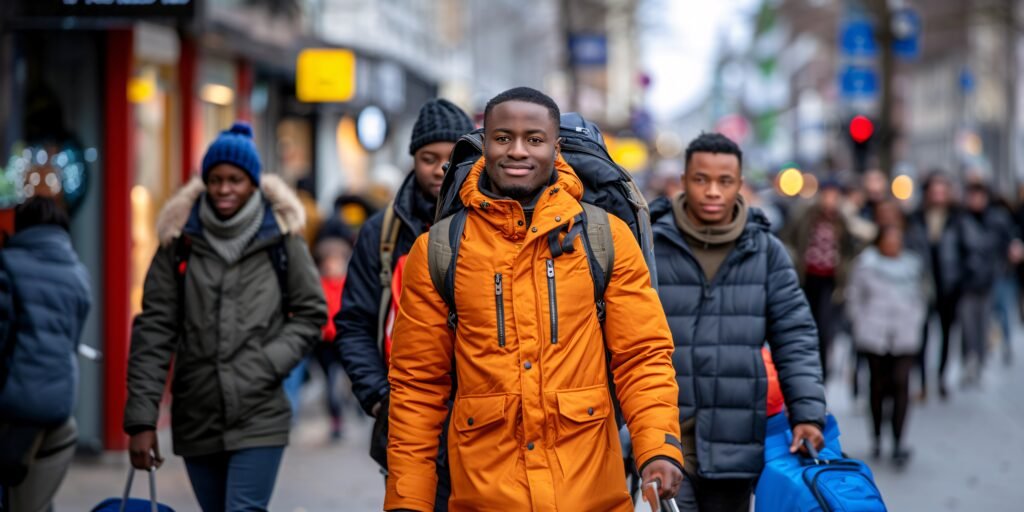


When my family arrived in Minneapolis from Somalia in 2001, we had nothing but the clothes we were wearing and a small bag of documents. Within a week, we had an apartment, furniture, and a refrigerator full of food. Within a month, my father had a job. This was not government assistance or charity—it was our community.
Diaspora communities have perfected the art of mutual aid. Long before crowdfunding platforms and social safety nets, immigrant communities created sophisticated networks of support that helped newcomers establish themselves in unfamiliar lands.
The Somali community in Minnesota exemplifies this tradition. New arrivals are met at the airport by community members who have been informed through WhatsApp groups that span three continents. A family that arrived last week might be housed by a family that arrived last year, who were themselves helped by families who came a decade before.
These networks extend far beyond immediate settlement needs. Rotating savings groups, known as “hagbad” in Somali, allow community members to pool resources for major expenses. Business mentorship happens informally at community centers and mosques. Job opportunities circulate through networks before they are ever publicly posted.
Similar structures exist in diaspora communities around the world. Korean “kye” and Caribbean “sou-sou” serve the same function as Somali hagbad. Chinese, Indian, and Nigerian communities have developed elaborate business networks that help new arrivals find their footing.
The strength of these networks lies in their combination of obligation and reciprocity. Those who are helped are expected to help others in turn. The family that housed us in 2001 did so knowing that we would house future arrivals. The businessman who gave my father his first job expected that my father would do the same for the next newcomer.
In recent years, diaspora communities have leveraged technology to extend these networks across distances. Facebook groups connect diaspora members worldwide. WhatsApp chains coordinate aid across time zones. GoFundMe campaigns rally global support for community members in crisis.
For those outside diaspora communities, there are lessons to be learned. The mutual aid networks that immigrants have built offer a model of community support that is both more personal and more effective than many formal institutions. They remind us that the strongest safety nets are often those we weave ourselves.